

Wednesday, 28 October 2009


Wednesday, 21 October 2009
Sloe Burner

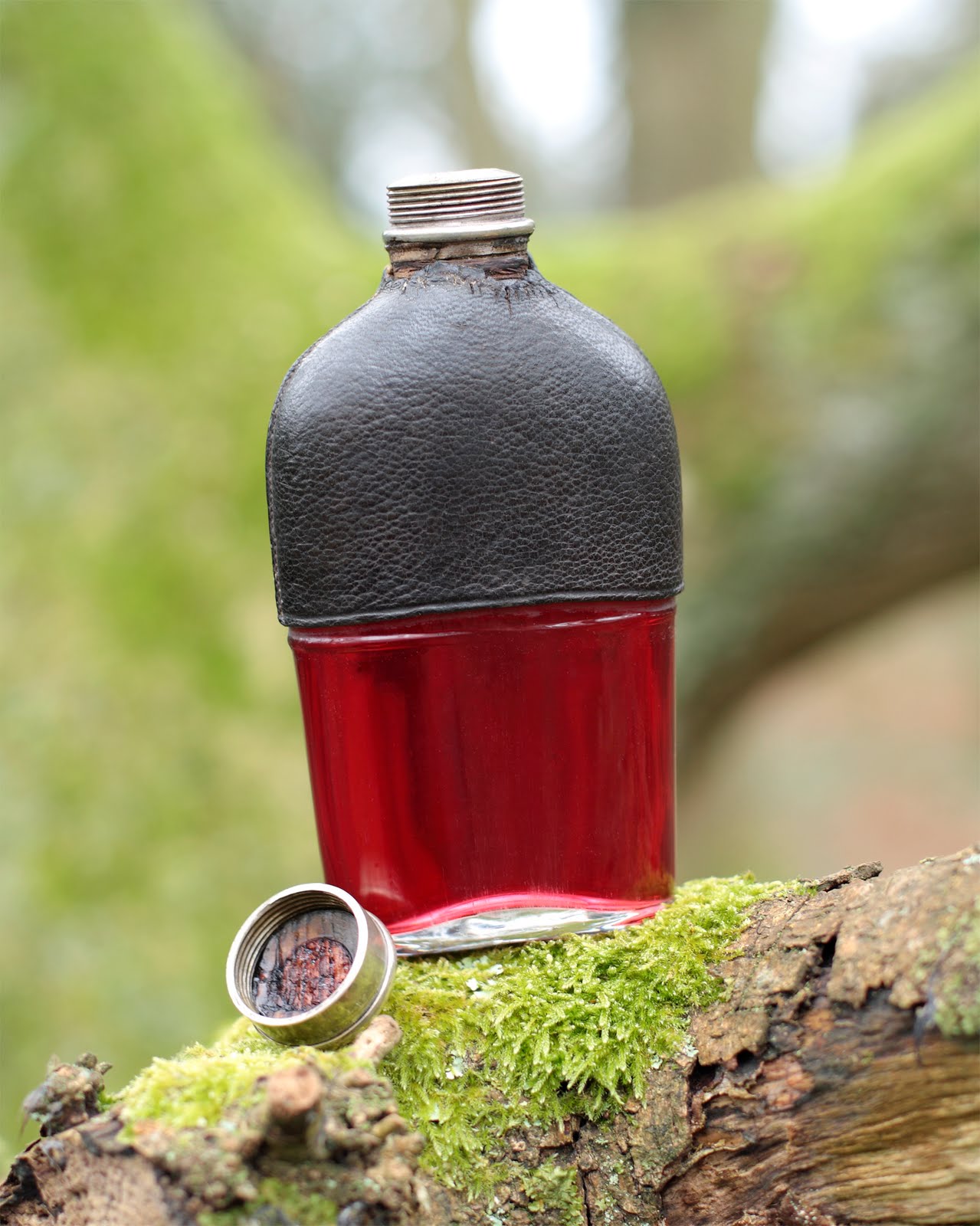
As the train grumbles towards Waterloo each morning I often note the word Sloe graffitied at regular intervals along the trackside. One can only assume that the scribe is a keen forager, gathering wild fruit from hedgerows while tag rival Kure smokes salted fish in an old tin at the bottom of the garden. Choke really should chew his food more.
Cloudy blue sloe clusters emerge during late summer, but are best picked for sloe gin after the first frosts of autumn. The slow ferment into thick, scarlet liqueur is a far cry from the grim reality of chewing on a freshly picked berry - a perennial source of entertainment as my little sister grappled with plum/sloe differentiation in her formative years. Falling victim to the ‘sloe ruse’ was to volunteer removal of the mouth’s moisture in an instant; tongue like blotting paper with a dusty, bitter aftertaste. Astringency is dispelled and a bottle made now should be ready to drink by Christmas, although extra patience is rewarded.
Pour 150g sugar into a half filled 75cl bottle of gin before filling to the rim with sloes. Piercing the skin of each berry sends inky plumes darting through the gin – a thorn from the bush is used in many traditional recipes. Gently agitating the bottle daily for the first 7 days and weekly thereafter helps everything blend together; I’m adding chilli, star anise and a cinnamon stick this year for a bit of extra spice.
Blackthorn itself is often depicted in folklore as being a tree of ill omen. Many a witch or heretic made their exit on a blackthorn pyre, no doubt surrounded by irate villagers clutching pitchforks and sundry garden paraphernalia. The berries are said to purge the body of evil maladies – an expulsion probably aided by various medicinal benefits (including a high vitamin C content).
Whether it’s added to a stock reduction, lightly sweetening a tagine or simply drizzled over ice cream for a quick dessert, it’s good to have a bottle of sloe gin at hand in the kitchen. Top on the list has to be a small measure in a flute before topping up with champagne - amazing stuff. Not amazing enough to make me skulk around old railway lines with a spray can though.
Posted on bbcgoodfood.com 20th September 2009
Tuesday, 13 October 2009
Roasted chestnut and herb pesto


A giant sweet chestnut tree stoops over the platform as I wait for the 7:58 with a huddle of sleepy commuters each morning. Even the slightest breeze sends a shower of prickly hail advancing towards us; as the startled panic subsides I quickly gather a handful of nuts into my pocket before shoehorning onto the train. A simple pesto is a good way of using up herbs in the garden before the cold sets in; replacing olive with rapeseed oil helps bring the chestnut and herb flavour through.
100g sweet chestnuts
Good handful mixed basil, parsley and mint leaves
50g grated parmesan
150ml rapeseed oil
2 garlic cloves
Salt and pepper
Cut a small cross in each chestnut and roast for 30 minutes (200°C). Cool before crushing with the flat side of a knife, removing shells and blitzing kernels in a food processor. Throw in remaining dry ingredients and pulse until finely chopped. Add oil, mix together and season to taste.
Thursday, 3 September 2009
Beware the friendly stranger
With a flourish of deranged abandon, a crazed pheasant flung itself across the windscreen of the car last night. My initial horror at its scant regard for the Highway Code was quickly replaced by the need to inspect the rear view mirror; both for signs of a jam sandwich in our wake, and the glint of steel in the shadows.
As times get harder and the cost of food rises, poaching is becoming increasingly common throughout the countryside and urban fringes. Dorset police have reported cases of bread and jam being used to lure unsuspecting deer in front of cars; with subsequent, vehicle-dispatched venison stolen into the night after motorists leave the scene.
In acknowledging the genuine seriousness of the situation, it’s hard not to be sidetracked by flickers of surrealism. Jam sandwich bait? It’s almost cartoon-like in its conception, as if Wile E. Coyote has been brought in as a consultant. A silhouetted figure leafing through the pages of a well-thumbed ‘Acme Poacher’s Compendium’, thin spirals of cigarette smoke twisting through low branches. Trout, hare, chickens, pheasants and (almost as bizarrely) bees, the rise in poaching is a reflection of the times - one that dustily echoes much older ways of life.
Game abounds at the village butcher. I’m busy contemplating the venison steaks when a quietly spoken exchange at the far end of the shop spills into laughter. “Don’t bring too many in, I’ll never shift ‘em” smirks the man in bloodstained white, his acquaintance nodding in agreement before trudging up the high street. The butcher knows I’m onto him, there’s a shimmer of malevolence in his eyes as he slides my venison across the counter. That, or he forgot to take an antihistamine this morning. It’s hard to tell really. I grab a box of farm eggs and faux-nonchalantly enquire about the locality of his wild meat. “We get allsorts in ‘ere, I’ve a man who helps me out – clean shot to the head is the best way.” Heading back to the car, it’s still not clear if he was referring to the deer or those who ask too many questions.
A handful of raisins and chips in a paper cone feel like an appropriate, Dahl-inspired addition to my game stew, the former swelling gently as they simmer away in the thick sauce. Hazy memories of the ‘Danny the Champion of the World’ school of poaching seem a million miles away in this day and age; poaching is a lucrative and large-scale business. Watch out for preserve-laden snacks in the headlights.
Posted on bbcgoodfood.com 14th September 2009
Wednesday, 2 September 2009
The heart of the matter
I was ill-inclined to rekindle the ashes of what had been a brief and tempestuous relationship with the globe artichoke. Last year’s debacle - an event that quickly imploded into a spectacle of profanity and vegetable abuse, was blighted from the outset and resulted in an oversized thistle making a prompt, window facilitated exit from my life.
Simple start this time: cut the stalk off, trim the top and boil for 35-45 minutes. After draining and resting the artichoke on a board I begin to peel off the outer scales - they fall away easily, my fingertips quickly pointing out that the inner layers remain hotter than the surface of the sun. A generous slab of butter over the steaming leaves prompts an unusual development - scraping the smooth, pulpy inside of a scale into the mouth with your teeth feels odd yet strangely satisfying. Still, not one to order on a first date. A recipe I’ve found in an old book enthuses the merits of chewing on the tough outer scales too, an opinion that upon reflection, seems misguided. They’re horrid. Spooning out the furry choke is the final step en route to the heart.
“Is that it?” remarks a visibly disgruntled girlfriend, eyeing the heart suspiciously while offering a cusory glance at the heap of debris on the board. Nonplussed, I quarter the heart before adding a sprinkle of salt and few grinds of black pepper - it’s a brief but tasty affair.
Having spent the best part of an hour unravelling its babushka doll exterior, I’ll concede that the resultant volume of ‘choke heart matter appears less than impressive. In its uncooked form an artichoke has a fantastic sculptural beauty; the aesthetic transition is the equivalent of arriving at the Albert Hall to find Dick Van Dyke on stage performing ‘The Planets’ solo on a nose flute. No actually, I’d pay good money to see that. Maybe it is worth the effort.
Posted on bbcgoodfood.com 24th April 2009
Subscribe to:
Posts (Atom)