Pages

Monday, 26 July 2010

Foraging

One of the most enjoyable things about foraging is the way in which it compels a greater awareness of one’s surroundings – the need to slow down, pause and look. My walk (run) to the station each morning plots a dishevelled and hastily coordinated line towards town – it’s only as the dust starts to settle in the evening and I make my way home that I spot what I’ve missed. Lime, sweet chestnut, ash, elder, common mallow, dandelion – last week I found clumps of wild fennel just a couple of hundred yards from our front door. Bit of a poor show that they’re marooned in a central reservation on the A331.

It goes without saying that a major aspect of foraging is identifying not just what to eat, but what to avoid. It’ll be a long while until I explore certain plants in the umbellifer family; wild chervil’s uncanny resemblance to a dangerous cousin is a little too close for comfort. There’d be few complaints from the family if I stirred a handful of finely chopped hemlock into a herby risotto, mostly due to the fact that we’d have expired at various points around the dining room. That said, spotting poisonous plants can provide clues to finding edible ones; foxgloves like soil with a higher PH, acidity loving sustenance may well be nearby.

Robin Harford runs a number of wild food courses in and around Sidmouth, East Devon (www.foragingcourses.com) – a great start if you’re keen on foraging. It was a revelation to discover that dried hogweed seeds have a lightly citrus, cardamom flavour; similarly I had no idea that German uniforms were woven from nettle fibre during World War 1. Nettles are a fantastically versatile plant, higher in vitamin C than oranges and packed full of protein. Why we use them so infrequently is something of a mystery.

Reedmace (bullrushes, as I erroneously knew them as a youth) is in flower about this time of year; slender spikes poking out of riverbanks and ponds with a fuzz of cottony pollen on top. When flour was rationed during the forties reedmace was regularly used as a substitute in bread making (roughly 20% pollen, 80% flour), apparently the roots are tasty too (not entirely dissimilar to hearts of palm). I could be onto a winner with the ‘hedgerow pizza’ – reedmace dough base, steamed nettle and ricotta topping with a scattering of mallow flowers at the end to add a bit of colour. Might work on an alternative title for the ‘Chocolate and hogweed torte’ though.

Posted on bbcgoodfood.com 26th July 2010

Wednesday, 23 December 2009

Friday, 27 November 2009

My scrumps


I ran into Old Man Mallet in the apple orchard yesterday. This was a cause for concern as a) my pockets were literally bulging with apples, b) he was carrying a twelve bore shotgun and c) it’s his orchard. As he glided down the footpath towards me I noticed a pair of squirrels hanging lifelessly from his left hand, an observation that did little to settle my unease.

Perhaps I shouldn’t feel guilty. Thousands of apples line the orchard floor; a muggy sweat of rotting fruit thickens the air with dust and vinegar. It’s an alarming amount of waste and a sad indicator of the decline affecting many English orchards; two thirds of which have disappeared in the last three decades.

Scrumping is by definition an act of criminal enterprise, the acquisition of another person’s property without consent. Theft. Robbery. Pilferage. Orchards aside, I’ve had my eye on an old pear tree that sits in the front garden of a house at the end of the road, branches flecked with russety-hued fruit. Surely too many for one household alone, this is becoming increasingly apparent as a mash of squidged fruit drifts up the driveway and across the lawn. Zero chance of confiscating a few pears off the tree though - not without stilts anyway.

This is the essence of conscientious scrumping - “a few”. Two years ago my parents experienced a sorry episode in which the plum tree on the farm was completely stripped of fruit overnight. Less scrumped, more harvested. As part of the bigger picture it’s not that important (at least it wasn’t a van load of tools), but when you’ve spent the summer looking forward to untold crumbles it’s far from ideal.

Is Scrumping a simple gesture of enthusiasm towards oft-wasted food or contemptible, premeditated plunder? I make it away from Mallet unscathed; he’s far more concerned about being late for a game of tennis at the Manor. Fruit looting has won the day, but I’m stuck with an image of him propelling dead squirrels across court with a beaten-about Slazenger. What a way to spend an evening.

Posted on bbcgoodfood.com 25th November 2009

Tuesday, 24 November 2009

Masterchef

 How I chortle, reclining on the sofa with a glass of chilled wine. “Father of two Steve from Hampcestershireboro” has only gone and prepared a plate of ravioli that boasts the visual appeal of a pile of old envelopes; judging by John’s face, the taste too. Had this moment been illustrated in The Beano, Gregg might be shaded in woozy off-green, “Boik!” captioned in close proximity. C’mon Steve, get it together. “Cooking doesn’t get tougher than this” – I’d hazard that I’m not alone in thinking, “Yeah right”.

 Maybe I was a little hasty. ‘The Invention Test’ that features prominently in the early rounds of Masterchef will be one of the big attractions for visitors at Masterchef Live, which runs this weekend at the London Olympia. The premise is thus: compete against 29 other entrants, rustle up a dish with a bag of mystery ingredients in half an hour and (hopefully) make it through to the final four to have your meal judged by John & Gregg.

 I’d been pretty Zen-like en route to the show this morning, but as the expanse of hobs, chopping boards and knife blocks unfolds in front of me I feel a quiet flicker of panic. This flicker seems to ripple through the group when it’s announced that Sir Terry Wogan is to be a special guest judge; sampling the final dishes and offering a critique with John & Gregg. Being lampooned for burning the garlic is one thing; accidently poisoning a national treasure is another story.

 We’re waiting for the green light to inspect our mystery ingredients. A keeno rival on a nearby cooking station is peering into her bag inquisitively – actually, as I scan the units, everyone is. I take a look and catch a glimpse of a chicken breast, bacon rashers, Parmesan, carrots, broccoli, white wine, mascarpone, fresh mint and parsley. Storecupboard essentials like onions, garlic, sugar and spices are on a shelf under the counter. Compere TV’s Andi Peters gives the nod – it’s all on.

 “Fifteen minutes to go”. I’ve barely peeled the carrots, there’s so much left to do. What I have succeeded in is spilling a glass of water across the work surface; my trainers are soaking. I finally decided to make a chicken, mint and carrot salad with spicy harissa dressing – it’s still a long way off mind. Chicken’s poached though, which is a result.

 “10 seconds to go”. Any notions of adding a few quirky food styling tricks are out of the window; it’s literally a case of toss it all together, throw it on the plate and grin. I’m sorry Steve.

 My finished dish tastes pretty good, but lacklustre presentation looks to have slighted Nadia Sawalha, who was on hand to choose the final four. A guy on an adjacent unit seems pleased not to be up on stage with the finalists, as he shows me the raw centre of his piece of chicken I can kind of see why. The winning dish does look pretty good, a spicy grilled chicken breast with herby couscous. John, Gregg and Tel look pretty impressed. I didn’t even realise there was couscous in the bag.

Posted on bbcgoodfood.com 13th November 2009

Wednesday, 28 October 2009

Wednesday, 21 October 2009

Sloe Burner


As the train grumbles towards Waterloo each morning I often note the word Sloe graffitied at regular intervals along the trackside. One can only assume that the scribe is a keen forager, gathering wild fruit from hedgerows while tag rival Kure smokes salted fish in an old tin at the bottom of the garden. Choke really should chew his food more.

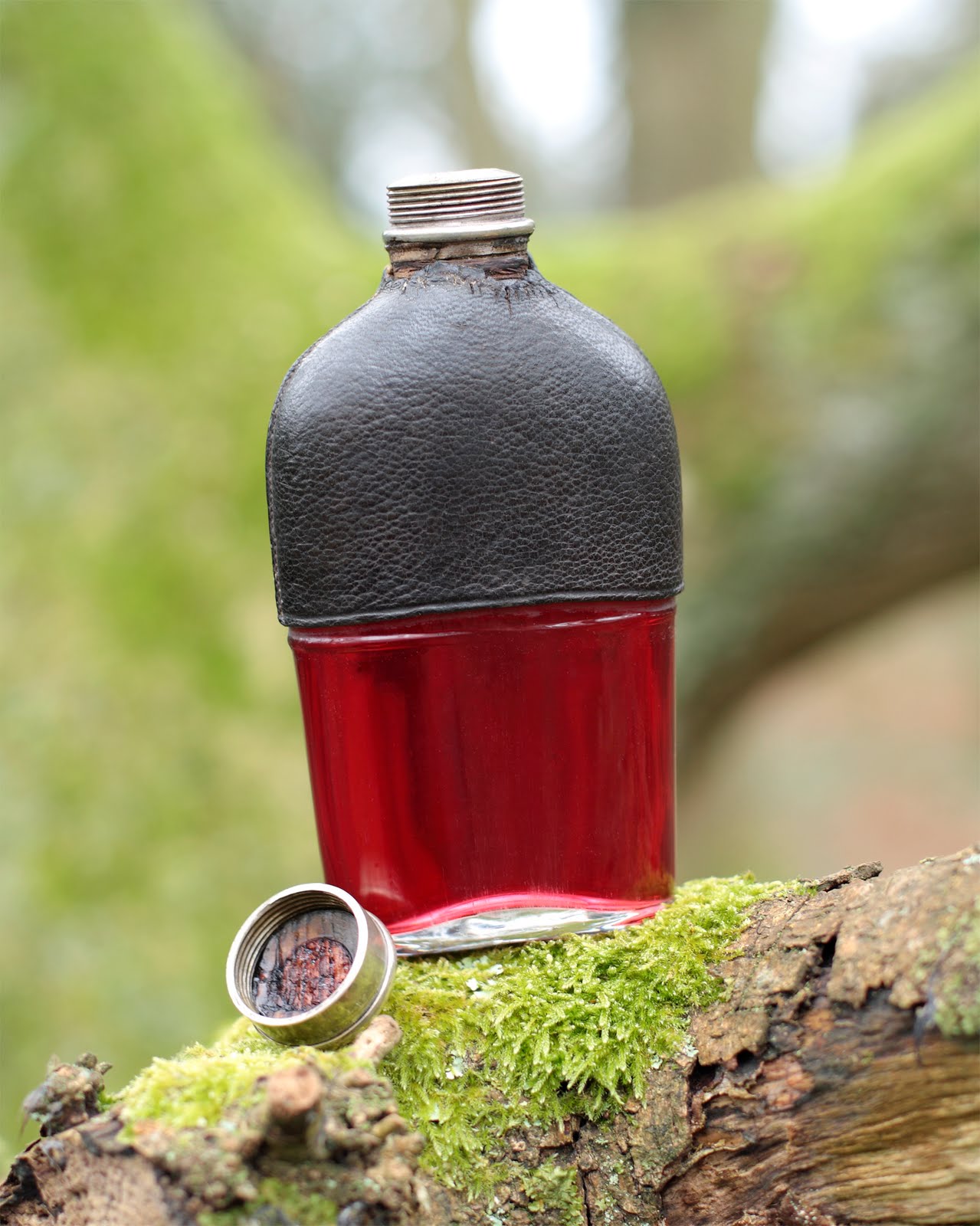
Cloudy blue sloe clusters emerge during late summer, but are best picked for sloe gin after the first frosts of autumn. The slow ferment into thick, scarlet liqueur is a far cry from the grim reality of chewing on a freshly picked berry - a perennial source of entertainment as my little sister grappled with plum/sloe differentiation in her formative years. Falling victim to the ‘sloe ruse’ was to volunteer removal of the mouth’s moisture in an instant; tongue like blotting paper with a dusty, bitter aftertaste. Astringency is dispelled and a bottle made now should be ready to drink by Christmas, although extra patience is rewarded.

Pour 150g sugar into a half filled 75cl bottle of gin before filling to the rim with sloes. Piercing the skin of each berry sends inky plumes darting through the gin – a thorn from the bush is used in many traditional recipes. Gently agitating the bottle daily for the first 7 days and weekly thereafter helps everything blend together; I’m adding chilli, star anise and a cinnamon stick this year for a bit of extra spice.

Blackthorn itself is often depicted in folklore as being a tree of ill omen. Many a witch or heretic made their exit on a blackthorn pyre, no doubt surrounded by irate villagers clutching pitchforks and sundry garden paraphernalia. The berries are said to purge the body of evil maladies – an expulsion probably aided by various medicinal benefits (including a high vitamin C content).

Whether it’s added to a stock reduction, lightly sweetening a tagine or simply drizzled over ice cream for a quick dessert, it’s good to have a bottle of sloe gin at hand in the kitchen. Top on the list has to be a small measure in a flute before topping up with champagne - amazing stuff. Not amazing enough to make me skulk around old railway lines with a spray can though.

Posted on bbcgoodfood.com 20th September 2009

Tuesday, 13 October 2009

Roasted chestnut and herb pesto


A giant sweet chestnut tree stoops over the platform as I wait for the 7:58 with a huddle of sleepy commuters each morning. Even the slightest breeze sends a shower of prickly hail advancing towards us; as the startled panic subsides I quickly gather a handful of nuts into my pocket before shoehorning onto the train. A simple pesto is a good way of using up herbs in the garden before the cold sets in; replacing olive with rapeseed oil helps bring the chestnut and herb flavour through.

100g sweet chestnuts
Good handful mixed basil, parsley and mint leaves
50g grated parmesan
150ml rapeseed oil
2 garlic cloves
Salt and pepper

Cut a small cross in each chestnut and roast for 30 minutes (200°C). Cool before crushing with the flat side of a knife, removing shells and blitzing kernels in a food processor. Throw in remaining dry ingredients and pulse until finely chopped. Add oil, mix together and season to taste.