Pages

Showing posts with label spring. Show all posts

Tuesday, 28 May 2013

Spring foraging


Pic 1
• Wild sorrel

Pic 2
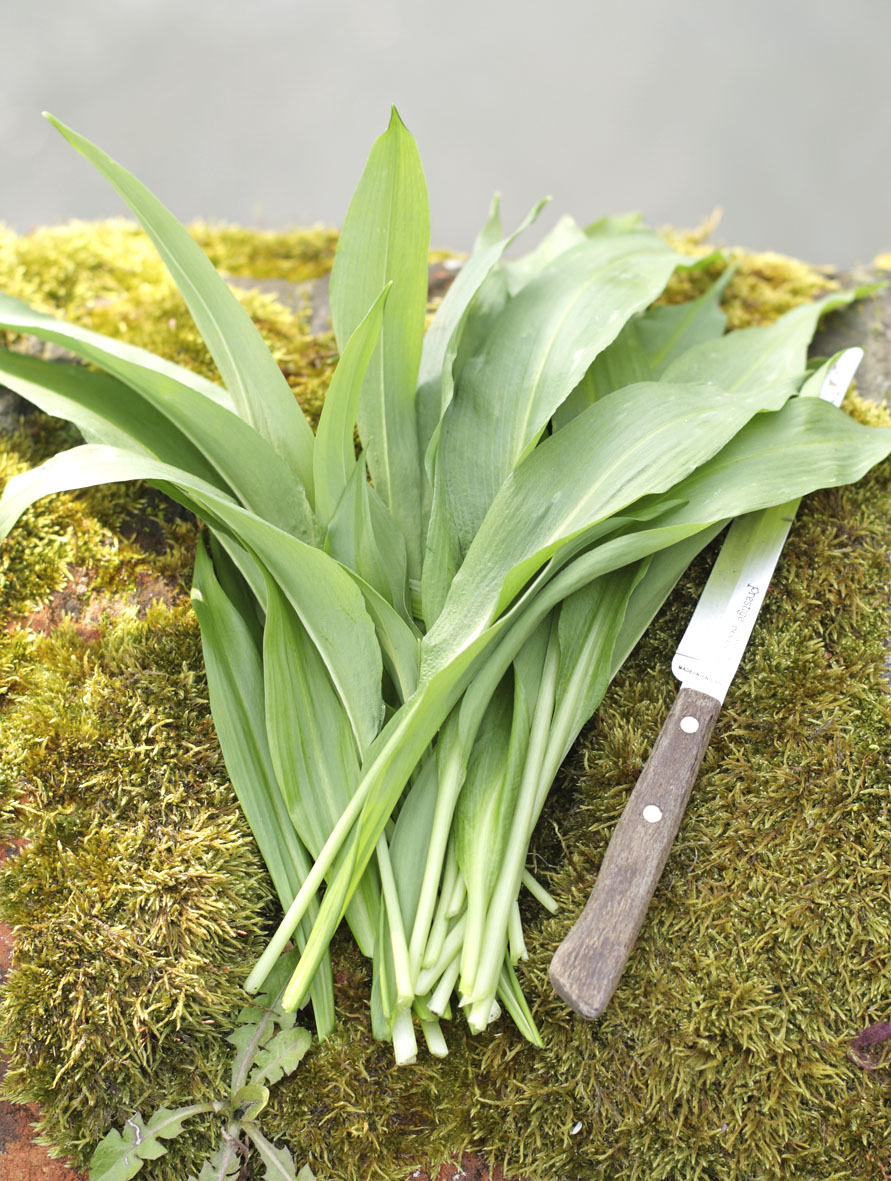
• Ramsons
• Garlic mustard (Jack-by-the-hedge)
• Wild sorrel
• Wild mint
• Vetch shoots

Sunday, 6 May 2012

Morel risotto with buttery hop shoots

The Hop shoots are going wild in my neck of the woods. Thin green tendrils snake through the hedgerows, twisting upwards towards the sky in a flourish of Spring exuberance. It took me minutes to pinch off a large bowful this morning. I quite like crunching on them raw, but they're equally tasty quickly cooked through with a little butter.

FOR THE RISOTTO
2 Large garlic gloves, finely chopped
8 Shallots, finely chopped
1 Bay leaf
A good splash of white wine
8 Large Fresh or dried Morels, chopped (if dried, keep the water that you've soaked the mushrooms in, to add to your stock)
300g Arborio risotto rice
1 - 1.5 Litres hot Chicken or vegetable stock (kept hot of the hob)
75g Hard goat's cheese, grated
25g Unsalted butter
FOR THE BUTTERY HOP SHOOTS
A large handful of Hop shoots
25g Unsalted butter
Salt and pepper


1 Melt a knob of butter in a pan and soften the garlic and shallots in a splash of olive on a low heat for 10-15 minutes, stirring regularly. Stir in the rice, bay and mushrooms, then continue stirring until the rice grains start to look transparent. Pour in the wine, leave for a few minutes, then begin to gradually add the stock. Add it slowly, a ladle at a time and only add more when the liquid has been absorbed. After about 25 minutes the risotto should look rich and creamy, and the rice should be cooked (while still retaining a bit of bite). Season to taste. Just before serving stir in 25g of the goat's cheese and a good-sized knob of butter, to add an additional sheen of glossy richness.
2 For the buttery hop shoots, simply melt 25g of butter in a pan, then flash the shoots in the heat for 3-5 minutes. Season, then spoon on top of the risotto, with an extra grating of cheese for good measure.

Friday, 4 May 2012

Lamb tagliata with watercress and tomatoes

Recipe & food styling: Jane Hornby
Prop styling: Jo Harris

Tuesday, 1 May 2012

Lime leaves


Now's the time to gather young leaves from the Common lime. But be quick; as with many wild greens, their light succulence is replaced by toughness and astringency later in the season. Lime leaves have a pleasant, cooling flavour and subtle melon notes; they're great in spring salads or sandwiches. I like to use them to make little canapes; flake a thin line of smoked mackerel along the centre spine of a leaf, squeeze a few drops of lemon juice onto the fish, finish with a few Ramson flowers and then roll into cigarellos (secure with a cocktail stick if necessary). 

Monday, 16 April 2012

Quick Jack-by-the-hedge rostis

 If there was any doubt that Spring hadn't quite flickered into life, the tangerines-and-cream scatter of an Orange tip butterfly hurrying along a quiet country path is a firm chime of the seasonal clock. It'll be one of the first spring butterflies that you'll see; it's certainly one of the most striking. At this time of year one should also keep an eye out for its citrus-lemon spring cousin, the Brimstone.
  Orange tips and I share a similar culinary pursuit: Garlic mustard. It's also known as Jack-by-the-hedge, and the leaves are the common food source of the butterfly's caterpillar. In the spirit of polite consideration, I always inspect each leaf carefully before picking, and only ever take a few leaves from a single plant.

2 large potatoes (there's no need to peel them)
2 red onions
A good handful of finely chopped Jack-by-the-hedge (Garlic mustard) leaves
Lemon zest (optional)
Salt and pepper
Olive oil


1 Grate the potatoes and onion. Over a bowl, squeeze the mixture in batches between both hands to remove as much water as you can (the drier the grated mix, the more likely your rostis will hold together). Stir in the chopped Jack-by-the-Hedge leaves, lemon zest and season well.
2 heat a large, well oiled frying pan. Use your hands to shape four saucer sized patties, then carefully place in the pan. Use a spatula to tidy up any crumbly edges. Leave for 5-7 minutes, without moving the rostis.
3 Place a large plate over the frying pan, then turn the rostis onto the plate. Use a fish slice to slide them back into the pan, then cook for a further 5-7 minutes on the other side until golden. Great served with a poached egg on top.


Here's another Garlic mustard recipe...


>>> Baba ganoush with garlic mustard flowers <<<


Tuesday, 3 April 2012

Watercress

Prop styling: Jo Harris

Saturday, 25 February 2012

Wednesday, 20 April 2011

Asparagus


Hot damn! The UK asparagus season officially starts this Saturday (23rd April). Here is some for you to look at with your eyes.

See here for more information on British asparagus:


Monday, 28 March 2011

Wild leaf and spring flower salad


At some point during the weekend I'll find myself drifting listlessly

along the salad aisle; inspecting withered, asphyxiated leaves as they

breathe beads of condensation onto tightly-sealed plastic shells. I

can't pretend to be a wild food/grow your own martyr (eight times out

of ten a bag of rocket is flung into the basket) - but today, as the

sun shone, it just wouldn't do.


Amélie and I had been out for a walk the morning before, so I had a

rough idea of what was around. On the off-chance I wandered up the

track next to the wild apple - bunches of young ox-eye daisy leaves

were poking up though the grass. Juicy and succulent, I think they're

equal to any salad leaf.


Wild leaf and spring flower salad

• Ox-eye daisy leaves

• Dandelion leaves (used sparingly, they can be quite bitter)

• Hairy bittercress (leaves and flowers)

• Pink dead nettle (leaves and flowers)

• White dead nettle (leaves and flowers)

• Common vetch shoots

• Gorse flowers

Monday, 21 March 2011

Wild garlic


Every time I put this old coat on I forget that the lining in the right pocket's completely worn through. The story unfolds in a similar fashion each time - absence of small change, no oyster card, notes jotted on paper gone; to an observer the trail in my wake must look like a poor, Hansel and Gretel-inspired means of finding the way back home. Rage ensues, invariably vocal and with reference to "That bastard coat" - yet still, a year or so will pass, I'll see it on the hanger and think, "I haven't worn that in ages!".

There's spot by the Whitewater River that I head to each year when the Wild garlic is in full swing. Cross the old moss-covered bridge and a familiar garlicky hum drifts out of a small patch of woodland by the riverbank; closer inspection reveals clusters of green, ribbon-like leaves unravelling across the ground towards the water's edge. I parked the car by the roadside and made my way through the trees, basket in hand. Having gathered a few large bunches, cut cleanly at the base with a knife, I headed back to the car.

Could I find the (only set of) car keys? Reader, it took me twenty five minutes to find those bloody things in the woods, rifling frantically through the Ramsons as if foraging for some rare, key shaped truffle. I eventually found them, concealed from the eye by a heap of broken branches - by which point my nerves were shot to bits.

I like to keep things simple with wild garlic - last night I stirred a finely-chopped handful through a block of softened butter, wrapped it in foil, then rolled it into a cylinder shape. Kept in the fridge, a couple of pound coin-sized slices melting on a juicy steak are a thing of wonder. The coat is back on the coat rack, after a good bit of stitchwork.

Monday, 21 February 2011

Roast beetroot with smoked mackerel, horseradish cream and hawthorn shoots


The countryside yields a meagre harvest in the final few weeks of winter. I found myself clutching at straws in late January; returning from the wood with nothing but a couple of herb bennett leaves and a bag of pine needles. There's a bit of young nettle growth knocking around, but that's about it.


So it was with genuine excitement that I wrote about the emergence of hawthorn shoots last week. These young leaves have a gentle nutty flavour; it's best to pick them now as they get increasingly bitter with age. Spring abounds. Nearly.


Serves 4

8 Small beetroots

4 Smoked mackerel fillets

3tbsp Creme fraiche

3tbsp Creamed horseradish

Olive oil

Salt & pepper

1 Lemon

Hawthorn shoots


Heat your oven to 200C/180C fan/gas 6. Give the beets a good scrub; dry with kitchen paper, then quarter. Season in an oven-proof dish, drizzle with olive oil and roast for about 45 minutes. Mix the creme fraiche and horseradish together in a small bowl. When the beetroot is cooked, transfer into a medium-sized bowl, flake in the mackerel and spoon in the horseradish cream. Toss briefly with salad tongs, just so the beetroot and mackerel lightly catch the horseradish cream. Serve with a squeeze of lemon juice and fresh hawthorn shoots.


Sunday, 13 February 2011

Artichoke and pancetta ciabatta


It felt like spring was in the air yesterday. The sun was shining, slender crocus buds peered skyward out of flower beds - there was even a light peppering of Hawthorn shoots among the hedgerows on Highgate Lane. These young leaves were known as 'bread and cheese' back in the day, and are great nibbled straight off the hedge or gathered and tossed into a spring salad. For a moment I completely forgot about warming soups, thick stews and brooding winter sustenance, raiding the fridge in search of something quick and zesty. Today it's raining.

Artichoke and pancetta ciabatta
Serves 4 as a light lunch

1 Large ciabatta
A pack of marinated artichoke hearts
8 Rashers of smoked pancetta
A handful of rocket leaves
Parmesan shavings
Olive oil
Salt & pepper
Lemon wedges, to serve

Brush a piece of ciabatta with olive oil and place oil-down on a hot griddle pan. While the ciabatta's toasting, fry the pancetta for a couple of minutes until crispy and transfer onto kitchen paper. The rest is essentially an assembly job; artichoke hearts, broken pancetta splinters and a scattering of rocket leaves. Finish with parmesan shavings, a drizzle of olive oil, salt and pepper and a good squeeze of lemon juice.